Seattle’s loud leftist talk of sitting out “Trump’s World Cup” crashed head‑on into a packed stadium roaring with red, white, and blue.
Story Snapshot
- Seattle media and activists talked up a boycott of U.S. soccer over Trump, but organized proof is thin.
- World Cup crowds in Seattle still packed the stands, with more than 66,000 fans at the first match.
- Nationwide calls to boycott “Trump’s World Cup” show how the left keeps dragging politics into sports.
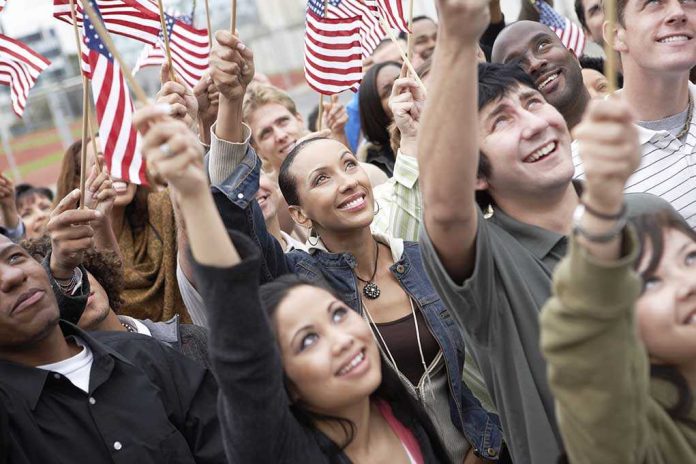
- Patriotic fans answered boycott talk the best way possible: by showing up, cheering, and waving the flag.
Seattle’s Boycott Talk Meets a Stadium Full of Fans
Local coverage out of Seattle captured the mood on the left early on: some soccer fans said they had “mixed feelings” about backing the United States team because of Donald Trump and his policies.[4] That phrase summed up a broader trend on the American left, where sporting events became one more stage to signal outrage over immigration rules, travel bans, and “Orange Man Bad” feelings.[1][3] But talk is cheap. When the World Cup finally came to town, real fans voted with their feet and their tickets.
National outlets had already reported that some fans in the United States and abroad planned to skip matches as a protest against American immigration policy and high ticket prices.[1] Commentators framed the 2026 World Cup as “Trump’s tournament” and floated boycott ideas on social media, podcasts, and op‑eds.[2][3] Yet even those skeptical reports admitted that serious boycotts almost never work. The tournament is too big and too loved for grandstanding activists to shut it down.[2]
From “Sit This Out” to “USA! USA!” in the Emerald City
When the games kicked off in Seattle, the stands told a very different story from the boycott chatter. One local account reported that the very first World Cup match in the city drew more than 66,000 fans, filling Lumen Field with flags, chants, and national pride.[14] Nearby businesses in Pioneer Square geared up for a “monster” Friday of crowds, stocking up and staffing up for surging soccer traffic.[15] Transit officials also prepared for heavy ridership tied directly to match days and fan events.[15]
Numbers from the wider tournament show the same picture. FIFA itself announced a new daily attendance record of more than 281,000 fans across matches, with an average of about 65,000 fans per game.[11] That is hardly the sign of a fan base staying home in shame. Sports business data tracked strong turnout across host cities, with only scattered empty seats here and there, mostly tied to pricing and logistics rather than politics.[12][17] In other words, the loudest boycotters were often the same people who were not big soccer fans to begin with.
What the Record Really Shows About Seattle’s “Leftist Boycott”
The local record does back up one narrow claim: there was real discomfort among a slice of Seattle’s progressive soccer crowd about cheering for the United States under Trump.[4][8] Online discussions on fan forums wrestled with whether to back the national team, focus only on their club team, or sit out certain games.[8] Policy fights over immigration and travel bans fed that mood, giving activists ready-made talking points about why they “just could not” chant for the same flag they see at Trump rallies.[3]
But so far, there is no hard evidence that a named Seattle leftist group passed a formal boycott resolution, organized mass no‑shows, or pulled permits for protest events aimed at shutting down World Cup enthusiasm.[1][2][3][4] Reports that did cover boycott calls made clear that the loudest voices came from Trump critics and commentators, not from official soccer bodies or broad fan coalitions.[2] This fits what scholars say about sports boycotts in general: they usually generate more headlines than results.[18][19]
Patriots Turn Sports Into a Reminder of What Still Unites Us
The bigger pattern reaches beyond one city. Research on sports boycotts finds that activists often try to turn mega events into weapons against a host country or leader, but full-scale boycotts almost never change policy.[18][19] Instead, they become symbolic fights over what a flag or anthem means. That is exactly what played out in Seattle. Left-leaning fans debated whether standing for the anthem meant supporting Trump, while regular Americans saw it as honoring the nation, the military, and basic freedom.
A single working mother could once take her child to a Yankees game for $40, but today that money would not even cover the online service fees. Sporting events have been stolen from poor and working class people and are now reserved only for the wealthy elite.
Capitalism has a… pic.twitter.com/zhgTZH4nJn
— Unplug The Empire (@UnplugTheEmpire) June 18, 2026
By showing up in force, patriotic fans in Seattle and across the country sent a clear message. You can hate Trump, love Trump, or feel tired of politics. But you do not have to surrender the flag, the anthem, or the joy of cheering for your country to the loudest activists online. In the end, the roar of a full stadium, the “USA!” chants, and the sea of red, white, and blue mattered more than any boycott hashtag. That is how everyday citizens push back on politicized outrage and keep American pride alive.
Sources:
[1] Web – Seattle Leftists Vowed to Sit Out US Soccer Over Trump … Stadium Went …
[2] Web – These fans are boycotting the World Cup. Will they make it a bust?
[3] Web – Why a World Cup boycott is unlikely, and what it would take to …
[4] Web – FIFA World Cup 2026: The Geopolitical Tensions at Play Off the Pitch
[8] Web – Trump Threatens to Move World Cup Out of Seattle Due to Mayor …
[11] YouTube – Blatter backs FIFA World Cup boycott over Trump policies
[12] Web – FIFA World Cup 2026™ sets new daily attendance record
[14] Web – Matchday statistics after 16 games at the 2026 FIFA World Cup
[15] Web – Seattle | Host City Guide | FIFA World Cup 2026™
[17] Web – Seattle bars, shops expect monster World Cup Friday
[18] Web – FIFA World Cup 2026 | SoundersFC.com
[19] Web – 2026 FIFA World Cup Match Attendance – Sports Business Journal