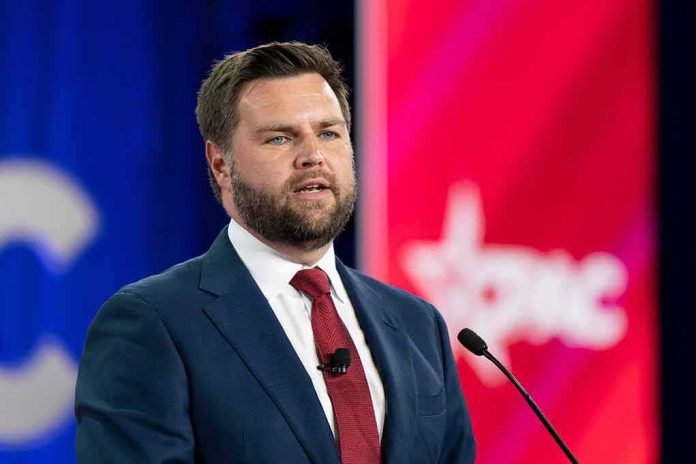
A fresh fight is brewing on the right over Trump’s new Iran deal, and JD Vance is racing to convince conservatives it is nothing like Obama’s JCPOA.
Story Snapshot
- JD Vance says the new Iran memorandum is a short, conditional framework, not a full “JCPOA 2.0” nuclear deal.
- The agreement reopens the Strait of Hormuz and aims to drive down energy prices while keeping U.S. military strength in place.
- Sanctions relief and any access to frozen assets are framed as “performance-based,” with no cash up front for Tehran, according to Vance.
- Leaked drafts from Iranian and regional media suggest much bigger economic concessions, raising real questions about enforcement.
Why Vance Says This Is Not Obama’s Iran Deal
Vice President JD Vance is drawing a hard line between Trump’s new understanding with Iran and Barack Obama’s 2015 nuclear agreement, known as the Joint Comprehensive Plan of Action. He stresses that what was signed is a very short memorandum of understanding, “about a page and a half,” which he calls a general framework for future steps, not a full nuclear treaty with secret side deals.[1] For many conservative voters who hated the JCPOA, that structure matters.
According to Vance, this framework sets up a “two-path” choice for Iran. If Tehran commits long term to never building a nuclear weapon and accepts verification, it can slowly reenter the world economy. If it refuses, the deal is designed to starve any nuclear push of money and access to trade.[2][3] Vance argues this makes the agreement more like a pressure tool than a reward package, and he insists it will “ensure Iran will never have a nuclear weapon,” echoing Trump’s public message.[5]
Strait of Hormuz, Energy Prices, and What Changes Right Away
The clearest immediate impact falls on the Strait of Hormuz, the vital waterway that Iran’s war moves helped choke off and that drives global oil prices. The memorandum requires the Strait to reopen quickly and, U.S. officials say, on a toll‑free basis for at least the first 60 days.[2][4] The agreement also pauses fighting between the United States and Iran for that period and is expected to reopen commercial access to Iranian ports as the U.S. blockade is lifted in stages.[4][5]
Vance has already claimed Americans are seeing lower oil and gas prices in the first day after the announcement, pointing to the Strait’s reopening as the main reason. For a conservative audience that has endured years of high energy costs driven by green mandates and supply shocks, this is a major selling point. At the same time, the administration says U.S. force levels in the region are not being cut, and the Navy will keep pressure on Iran until a final agreement is locked in, signaling this is not a retreat.[4]
Money, Sanctions, and the Fight Over “JCPOA 2.0”
The largest conservative worry is simple: are we sending Iran cash again? Vance is pushing back hard. He says Iran “doesn’t get a dime” until it meets clear obligations, framing the whole deal as “actions‑based” and insisting no funds have been released since the memorandum was digitally signed.[2][3] Axios reporting backs part of this up, describing sanctions relief and oil‑sale waivers as temporary and tied to Iran’s behavior, not automatic giveaways on day one.[2]
But competing drafts published by Iranian outlets and regional media tell a more generous story from Tehran’s side. One 14‑point draft describes suspending sanctions on oil and petrochemical sales, reopening the Strait, lifting the naval blockade, and unfreezing around $24 billion in Iranian assets during the 60‑day talks, with half accessible right after signing. Another detailed report says the United States would gradually release “billions” in frozen funds and ease sanctions as Iran halts enrichment and accepts stronger inspections. That gap between U.S. and Iranian narratives is exactly why critics shout “JCPOA 2.0.”
How Nuclear Limits and Inspections Would Work This Time
On the nuclear file, Trump’s team is trying to thread a needle: restore inspections and limits without repeating what conservatives saw as weak JCPOA sunsets and loopholes. Reporting on the draft framework says Iran would halt uranium enrichment for a negotiated period, with U.S. sources floating timelines of 12 to 20 years, and agree never to pursue nuclear weapons or related weaponization work. Iran would also accept an “enhanced inspection regime,” including snap visits by United Nations inspectors, to make cheating harder.
JUST IN: JD VANCE ON TRUMPS IRAN DEAL:
“You know what those Gulf Arab countries thought about the JCPOA? They hated it because they thought it empowered Iran to be a bad actor.
You know what they think about the Trump peace plan? They love it because they think it's turning… pic.twitter.com/nm2RfQJHxY
— Sulaiman Ahmed (@ShaykhSulaiman) June 16, 2026
Vance has described the coming talks as focused on a two‑step verification process, including how to remove or store Iran’s enriched uranium and what inspections will look like.[3] He says nuclear inspectors will return under the terms that end the war and that Iran must show real compliance before it sees serious sanctions relief. Supporters argue that unlike Obama’s deal, which front‑loaded economic benefits, this framework keeps the leverage in U.S. hands as long as Tehran has not fully dismantled its nuclear threat.
Why This Debate Matters for Conservatives
For many on the right, the core issues are trust, leverage, and American strength. Conservatives remember the pallets of cash, the rushed timelines, and the way Iran used earlier relief to fund terror groups across the region. Vance is trying to assure that this time is different by stressing that the memorandum is short, conditional, and centered on behavior—free passage through Hormuz, no nuclear weapon, and less money for regional proxies, in exchange for measured economic breathing room.[1][3][4]
At the same time, leaked drafts and Iranian state‑linked reports show how quickly a narrow framework can morph into a much bigger package of sanctions relief and reconstruction cash if negotiators are not careful. That is why many conservative voters will want to see the full text, the enforcement rules, and the inspection details before deciding whether this is a smart pressure deal or the start of another JCPOA‑style slide. Trump says he wants the text released “pretty soon” because it is “very powerful.” The proof will be in those pages—and in whether Iran finally changes its behavior, not just its signatures.
Sources:
[1] Web – JD Vance Just Explained Why Trump’s Iran Deal Isn’t the JCPOA 2.0
[2] Web – Vance Calls US-Iranian Memorandum of Understanding Brief and …
[3] Web – What’s in the Iran deal Trump says he’s ready to sign – Axios
[4] YouTube – Vance: ‘A lot of important details’ of Iran deal yet to be negotiated
[5] Web – Trump, Iran agree to memorandum of understanding opening Strait …