Viral videos claim New Yorkers are being jolted awake at 5 a.m. by Islamic calls to prayer blasting through city streets, but the real story reveals a fog of misinformation, political opportunism, and a clash between religious liberty and urban living that nobody saw coming.
Story Snapshot
- Videos from Manhattan and Brooklyn show the adhan (Islamic call to prayer) broadcast in February 2026, sparking outrage on social media
- Claims attribute broadcasts to Mayor Zohran Mamdani, but his mayoralty remains unverified and contradicts documented leadership timelines
- Mayor Eric Adams actually authorized limited mosque loudspeaker use in 2023 for Friday prayers and Ramadan, not daily 5 a.m. citywide broadcasts
- Conservative commentators frame the sounds as cultural “infiltration,” while official policy emphasizes religious freedom and community safety
- No mainstream news outlets or city officials have confirmed expanded permissions or policy changes beyond Adams’ 2023 guidelines
The Viral Firestorm That Woke a City
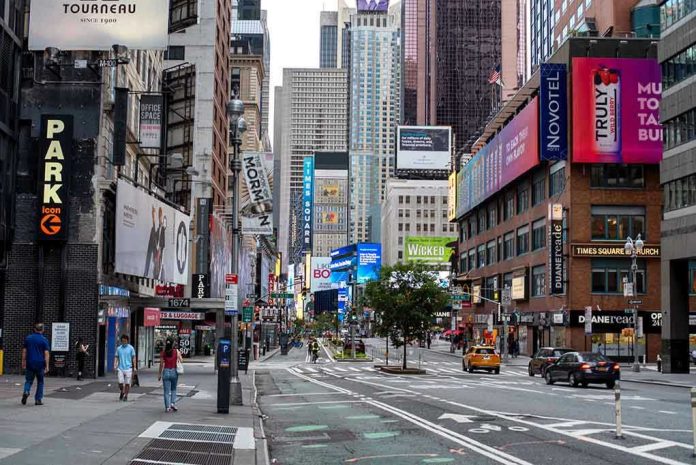
February 15, 2026, marked the moment Manhattan residents heard something unfamiliar echoing through their concrete canyons. A video captured the adhan, the melodic Islamic call to prayer, reverberating off skyscrapers at dawn. One resident’s stunned reaction captured the mood: “I never thought in my life I’d hear this in the middle of New York.” Within hours, Brooklyn followed with similar footage. Social media exploded with accusations of a religious takeover, amplified by influencers like Eric Daugherty and Dr. Maalouf, who framed the broadcasts as evidence of creeping Islamization under a new mayor nobody could quite verify.
The narrative spread like wildfire across right-leaning platforms. Charisma News published an alarmist piece tying the adhan to “spiritual principalities” and America’s supposed failure to repent after 9/11. RAIR Foundation shared videos warning of infiltration. The claim? Zohran Mamdani, described as a Ugandan-born Muslim socialist, had authorized daily 5 a.m. loudspeaker broadcasts across all five boroughs. The problem? Nearly every detail crumbles under scrutiny, revealing a story built more on political theater than municipal fact.
What Actually Happened in 2023
The adhan permissions didn’t start in 2026 under a mysterious new mayor. Mayor Eric Adams, who led New York City in 2023, announced guidelines allowing mosques to broadcast the call to prayer without special permits during Friday prayers between 12:30 and 1:30 p.m., plus during Ramadan iftar times. Adams framed this as cutting red tape for religious communities, emphasizing mosques’ roles in reducing crime and fostering multiculturalism. New York joined cities like Minneapolis in balancing religious expression with urban noise ordinances, a policy that generated minimal controversy at the time.
Adams’ policy was time-bound and specific, not a blanket authorization for dawn broadcasts citywide. The 2023 guidelines respected existing noise laws while accommodating Muslim communities during high holy periods. No credible evidence suggests Adams ever approved routine 5 a.m. loudspeaker use across Manhattan and Brooklyn. The viral videos from February 2026 show adhan broadcasts, but they don’t prove a policy expansion, a new mayoral directive, or violations of existing ordinances. What they do prove is how easily partial truths ignite when filtered through ideological lenses.
The Mamdani Mystery Nobody Can Solve
Zohran Mamdani’s alleged role as New York City’s mayor presents the story’s most glaring gap. Social media posts and conservative outlets describe him as the Ugandan-born Muslim socialist behind the broadcasts, yet no mainstream sources confirm his mayoralty. As of 2023, Eric Adams held the office. If Mamdani assumed leadership between then and February 2026, the transition escaped coverage by major outlets like The New York Times or local government press releases. This omission raises questions: Is Mamdani actually mayor, or has misinformation created a phantom villain to fuel outrage?
The lack of verified statements from Mamdani or City Hall officials deepens the mystery. No policy announcements, no press conferences, no documentation of expanded loudspeaker permissions exist in available records. The story hinges on viral videos and inflammatory commentary, not municipal evidence. Common sense suggests that if New York’s mayor authorized a dramatic shift in religious noise policies affecting millions, somebody beyond social media influencers would notice. Instead, the narrative thrives in a vacuum, filling the silence with speculation and fear rather than facts.
Religious Freedom Versus Urban Peace
The adhan controversy forces a legitimate debate Americans must confront: how do cities balance First Amendment protections with quality of life in densely populated areas? Muslims in New York, numbering over one million, practice a faith requiring five daily prayers, with Fajr at dawn around 5 a.m. Amplifying the call to prayer connects communities and honors centuries of tradition. Churches ring bells, synagogues sound shofars during High Holy Days, yet loudspeakers broadcasting at dawn in apartment-dense neighborhoods test tolerance differently than midday or evening sounds.
This isn’t about hating neighbors or fearing prayer, as some defensive voices claim. It’s about whether urban living requires compromises on all sides. Adams’ 2023 policy attempted that balance, restricting amplification to specific times when fewer residents sleep or work. If mosques now broadcast routinely at 5 a.m. without permits, they breach that compact, justifying complaints. If they operate within Adams’ guidelines and residents conflate limited permissions with daily intrusions, the backlash reflects misunderstanding amplified by alarmists. Either way, New York faces a question every multicultural city confronts: whose rights prevail when religious expression disrupts secular routines?
The Conservative Backlash and Spiritual Warfare
Conservative commentators seized the adhan videos as confirmation of their darkest warnings about immigration and cultural erosion. Charisma Media’s Abby Trivett linked the broadcasts to Freemasonry and spiritual principalities darkening America, suggesting divine judgment for post-9/11 failures. X users echoed sentiments like “This isn’t about religious freedom, it’s about cultural domination” and “You voted for this, New York.” The narrative taps into fears that American identity is slipping away, replaced by foreign practices imposed without consent, a perspective rooted in real anxieties about rapid demographic change.
Yet the spiritual warfare framing overshoots the evidence. Adams’ 2023 policy didn’t mandate Islam or erase Christianity; it extended to Muslims the same accommodations other faiths enjoy. Accusations of a takeover ignore New York’s history as a crossroads where Irish Catholics, Eastern European Jews, Caribbean Christians, and now South Asian Muslims have all negotiated space. The adhan at dawn may unsettle those unaccustomed to it, but calling it principalities borders on hysteria. If conservative values include religious liberty and local governance, the solution lies in debating noise ordinances through city councils, not apocalyptic rhetoric on social media.
New Yorkers Wake to the Islamic Call to Prayer https://t.co/0c19g0J41h
— bkbcrypto1971 (@bkbcrypto1971) February 17, 2026
The contradiction exposes opportunism. The same voices defending Christians’ rights to pray in schools or display nativity scenes now recoil when Muslims exercise similar freedoms. Principle demands consistency: either religious communities can amplify their practices within reasonable limits, or none can. Cherry-picking which faiths deserve accommodation betrays the neutrality required by the First Amendment. New Yorkers legitimately frustrated by 5 a.m. noise have a point, but framing the adhan as infiltration rather than a policy debate undermines their credibility and hands Islamists a grievance they’ll exploit.
What the Facts Actually Support
Stripping away the hysteria, the verifiable facts are these: Eric Adams authorized limited mosque loudspeaker use in 2023. Videos from February 2026 show adhan broadcasts in Manhattan and Brooklyn. No credible sources confirm Zohran Mamdani as mayor or document policy expansions beyond Adams’ guidelines. Noise complaints from residents appear genuine, but whether they stem from mosques exceeding permissions or from misunderstanding existing rules remains unclear. Mainstream outlets haven’t touched the story, a red flag that suggests either suppression or lack of substance worth covering.
The story likely falls somewhere between the extremes. Some mosques may push boundaries, testing how far they can amplify the adhan before facing pushback. Residents unaware of 2023 permissions react with shock, fueling viral videos. Opportunistic influencers weaponize the footage to paint a picture of Islamization, while progressive officials stay silent to avoid inflaming tensions. The truth matters more than tribal loyalties: if mosques violate noise ordinances, enforce the law. If they comply with Adams’ policy, educate residents. If the policy itself needs revision, debate it honestly without demonizing an entire faith.
Sources:
Islamic Call to Prayer Echoes Across NYC Ahead of Ramadan Under Mamdani’s Leadership – Charisma News
New York allows the loudspeaker call to prayer during Fridays and Ramadan – Telegrafi