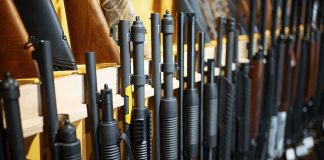
A Nevada man admitted he trafficked 140 guns to buyers tied to Mexican drug groups, exposing a cross-border pipeline that fuels violence on both sides of the border.
Story Snapshot
- Luis Alberto Osorio pleaded guilty to trafficking 140 firearms for Mexican drug organizations.
- The plea also covers straw purchasing, money laundering, and harboring unlawful workers.
- The scheme ran from April 2020 to September 2025; sentencing is set for February 11, 2027.
- Federal data show straw purchasing is a common trafficking method nationwide.
Guilty Plea Details and Charges
The Department of Justice said Luis Alberto Osorio pleaded guilty in federal court to four felonies tied to a years-long gun pipeline from Nevada to Mexico. Prosecutors said he conspired with others to buy firearms, magazines, and ammo at others’ request, then sell them in Mexico for profit. The plea covers straw purchasing of firearms, trafficking in firearms, harboring certain aliens, and conspiracy to launder money. The court scheduled sentencing for February 11, 2027, with a stated maximum of 70 years.
Prosecutors said the conduct spanned April 1, 2020, through September 17, 2025, and involved 140 firearms earmarked for people tied to drug trafficking organizations in Mexico. The official summary does not list co-defendants or itemize each gun, which is common for initial press releases. The U.S. Attorney’s Office in Nevada amplified the announcement on social media the same day, repeating the core facts of the case for public awareness.
How Straw Purchasing Feeds Cartels
Straw purchasing happens when someone buys a gun for someone else who wants to avoid attention or cannot pass checks. Federal assessments show straw purchasing is one of the two most frequent trafficking channels in the United States. The Bureau of Alcohol, Tobacco, Firearms and Explosives reported that about 39.5 percent of trafficking investigations from 2017 to 2021 involved straw buyers. That data helps explain why officials treat Osorio’s case as part of a larger pattern rather than an isolated episode.
Federal data also show straw purchasing rings move large numbers of guns across investigations. One assessment linked straw purchasers to 37,749 trafficked firearms nationwide over that five-year period. While many cases average fewer than a dozen guns, some operations scale up through repeat buys and multiple buyers. That structure makes detection harder and lets firearms slip into cross-border markets where cartels pay cash and demand steady supply.
Why This Case Resonates Nationally
The Osorio plea lands in a heated national debate about border security, crime, and government performance. Conservatives see cartel pipelines and illegal hiring as proof that past policies failed to protect communities and workers. Liberals see cross-border trafficking and money laundering as signs that profit often beats rules when oversight is weak. Both sides can agree on this point: when guns flow south and drugs flow north, families pay the price, and trust in institutions erodes.
𝐍𝐄𝐕𝐀𝐃𝐀 𝐌𝐀𝐍 𝐏𝐋𝐄𝐀𝐃𝐒 𝐆𝐔𝐈𝐋𝐓𝐘 𝐓𝐎 𝐓𝐑𝐀𝐅𝐅𝐈𝐂𝐊𝐈𝐍𝐆 𝟏𝟒𝟎 𝐆𝐔𝐍𝐒 — 𝐈𝐍𝐂𝐋𝐔𝐃𝐈𝐍𝐆 .𝟓𝟎-𝐂𝐀𝐋 𝐒𝐍𝐈𝐏𝐄𝐑 𝐑𝐈𝐅𝐋𝐄𝐒 — 𝐓𝐎 𝐌𝐄𝐗𝐈𝐂𝐀𝐍 𝐂𝐀𝐑𝐓𝐄𝐋𝐒
Elko, Nevada resident 𝐋𝐮𝐢𝐬 𝐀𝐥𝐛𝐞𝐫𝐭𝐨 𝐎𝐬𝐨𝐫𝐢𝐨 pleaded guilty to straw… pic.twitter.com/IsDpnIMdNQ
— M.A. Rothman (@MichaelARothman) August 16, 2026
Officials frame pleas like this as a warning to networks that use straw buyers, exploit unlawful labor, and wash profits through banks. Prosecutors still must present evidence at sentencing, and courts set punishment after reviewing filings from both sides. For citizens, the stakes are clear: cutting off the gun supply to violent groups means enforcing existing laws, tracking purchase patterns, and holding every link in the chain to account, from buyer to broker to border courier.
Sources:
townhall.com, justice.gov, x.com