
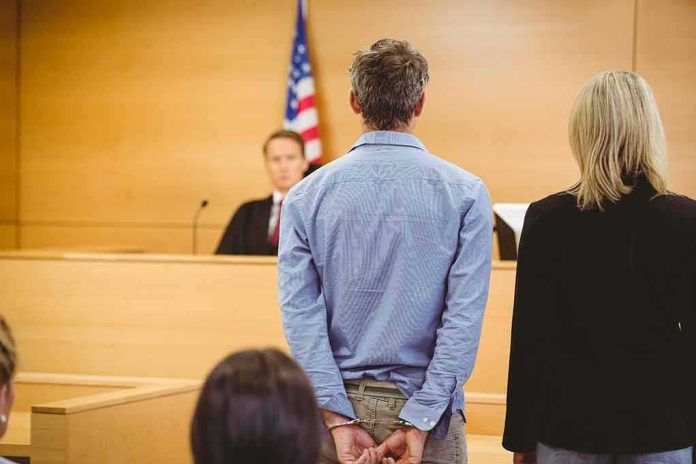
A Florida judge sent a convicted killer to death row even though the victim’s body was never found.
Story Snapshot
- A Pinellas County judge sentenced Tomasz Kosowski to death after a first-degree murder conviction.
- The court found the murder was cold, calculated, premeditated, and for financial gain.
- The body of attorney Steven Cozzi has not been recovered, yet evidence persuaded the court.
- The defendant represented himself and offered no defense case beyond closing argument.
What The Court Decided And Why It Matters
Judge Joseph Bulone sentenced former plastic surgeon Tomasz Kosowski to death for the 2023 murder of attorney Steven Cozzi in Pinellas County, Florida. The court said the killing was cold, calculated, and premeditated. The court also found a financial motive. Those two findings made the case eligible for capital punishment in Florida. The court weighed those aggravators against mitigation and ruled that death was warranted. The state case docket lists the first-degree murder charge against Kosowski.
Reporters at the hearing quoted the judge stating that Kosowski had “forfeited his right to live,” underscoring the gravity of the ruling. Coverage notes the rare mix of factors here: a missing body, a capital sentence, and a defendant who chose to represent himself at trial. Together they raise hard questions about fairness, evidence standards, and the risk of error in capital cases. The outcome puts Florida’s death penalty system back in the spotlight.
The Evidence And The Missing-Body Challenge
Prosecutors presented a theory that Cozzi was killed and his remains disposed of, even though search efforts did not recover a body. The conviction rested on circumstantial evidence that convinced the court beyond a reasonable doubt. Reporting describes Cozzi’s disappearance from his law office and the ongoing lack of remains. Despite that, the court accepted the state’s identity and disposal theory as proven. That acceptance drove both the conviction and the death sentence.
Florida law allows murder convictions without a recovered body if the total evidence proves death and criminal agency. Courts have upheld such cases when the record is strong enough. The Kosowski case fits that mold, though the public cannot yet see the full exhibits. The available docket confirms the case and charge, but the complete forensic files and sentencing order are not posted in open sources. That limits public review of every step the court relied on.
The Defense Strategy And The Court’s Response
Kosowski represented himself and did not call witnesses or build a separate defense case. He used closing argument to say the state failed to prove Cozzi is dead and to question the timeline and logistics of the alleged killing. He also pointed to credit-card activity after the date prosecutors say Cozzi died. The court rejected those claims and entered a guilty verdict for first-degree murder after a bench trial.
Defense choices can shape a record. Self-representation often reduces the testing of the state’s case through cross-witnesses and experts. That can matter later on appeal. Here, reports say Kosowski cross-examined the state’s experts and then argued reasonable doubt, but he offered no defense evidence. The judge still found the proof sufficient for both guilt and the two key aggravators, including financial gain.
Why This Case Hits A Nerve Across The Aisle
Americans on the right and left doubt that powerful systems always play fair. This case feeds that concern. People see a death sentence without a body and worry about mistakes, missing records, or overreach. Others see a court that weighed evidence, followed the law, and delivered justice for a vanished victim. Both instincts trace to the same fear: institutions often keep full files out of view, while asking the public to trust them.
🇺🇸 Former Florida plastic surgeon Tomasz Kosowski just received a death sentence for murdering attorney Steven Cozzi in 2023.
Kosowski held a years-long grudge after Cozzi represented the other side in a medical billing lawsuit.
Prosecutors said Kosowski kept a “murder bag”;… pic.twitter.com/ASFEeRiI0z
— NewsForce (@Newsforce) November 20, 2026
Transparency can help. Releasing the detailed sentencing order, the judge’s findings of fact, and the full exhibit list would let citizens judge the strength of the case for themselves. That includes the evidence behind the financial motive, the timeline support, and the location and cleanup claims. Florida’s courts will review this sentence, but sunlight now would reduce doubt later. Clear records build trust, even in the hardest cases.
Sources:
medpagetoday.com, cnn.com, goodmorningamerica.com, miamiherald.com, yahoo.com