In drug investigations, three distinct questions often collapse into one headline: Was a substance present, was it sold unlawfully, and did it cause harm? The Oxford, Mississippi, kratom seizures after two Ole Miss student deaths illustrate why separating those questions is essential to understanding both the evidence and what the law can actually prove.
The Short Version
- Police seized more than 500 units of kratom and other suspected narcotics from an Oxford vape shop and arrested two clerks on drug charges; Oxford has banned kratom since 2019.
- Packaged kratom was recovered at both student death scenes, prompting a criminal-drug probe; officials cautioned against assuming causation pending toxicology.
- Later reporting summarized affidavits describing undercover buys and bank-record links between at least one student and the raided shop; investigators also traced purchases by the other student to a separate store.
- The enforcement case (illicit sale/possession under a local ban) is materially stronger in public records than any claim that kratom caused the deaths, a causation question that typically requires toxicology and forensic comparison.
What investigators actually established — and what they did not
Law enforcement raided Puffs Vape, Tobacco and Beer Store in Oxford days after two University of Mississippi students were found dead in separate locations. Agents reported seizing more than 500 units of kratom along with THC cartridges, gummies, and other suspected narcotics, and two store employees were arrested on drug offenses. Those enforcement actions rested on a clear legal foundation: the City of Oxford prohibited kratom by ordinance in 2019, so possessing or selling it locally is a chargeable offense even if the plant is legal elsewhere in the state.
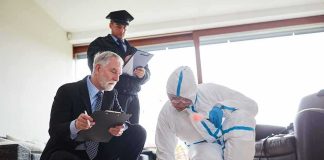
Investigators publicly confirmed that packaged kratom “sold from a retail store” was discovered at both death scenes, and multiple agencies, including a Metro Narcotics unit, treated the matter as a criminal-drug investigation while urging the public to withhold speculation until toxicology results were complete. Subsequent summaries of a DEA affidavit reported two kinds of linkage: undercover purchases and transaction records. One deceased student, Aidan Hamilton, was reportedly tied by bank records to purchases at Puffs; the other, Robert Strang, was linked to a different store, Express Mart #7. Those same reports recounted that investigators seized over 500 kratom-related products from Puffs.
How the enforcement case differs from a causation case
Prosecutors build drug cases along different evidentiary tracks. For illegal sale or possession (particularly where a local ordinance bans a substance outright), the ingredients are familiar: a binding law, a buy, seized inventory, and a chain tying the defendants to the contraband. Here, public accounts describe undercover buys, seized products, and clerk arrests — an enforcement narrative that stands on its own under the Oxford ban.
A death-causation theory is a higher bar. It typically requires toxicology, autopsy findings, and forensic comparison across samples: Was the same substance — often down to brand, lot, or alkaloid profile — present at both scenes and in the decedents’ blood? Were there co‑ingestants that better explain the mechanism of death? Officials stated repeatedly that there was no confirmed evidence kratom caused either death, and that toxicology was pending. Coverage also notes that authorities did not, at the time, assert the seized shop inventory was the exact product found at the scenes. Those are not hedges; they are the threshold gaps that distinguish enforcement from causation.
What the affidavits and store linkages add — and what remains unresolved
Affidavit summaries attributed to investigators describe specific, testable facts: a confidential informant asking for “kratom-based pills,” a clerk producing a package from a drawer, and bank records connecting at least one student to purchases at Puffs. For the other student, investigators reportedly traced purchases to a separate location, Express Mart #7. Those details sharpen the retail-source map without yet settling whether the products sold were the same as those recovered at the scenes — or whether those products were lethal.
Two threads would close that loop: laboratory toxicology for each decedent and forensic comparison of the packaged products (from both scenes and the shop inventory). The latter entails chemistry and labeling minutiae — mitragynine/7‑hydroxymitragynine content, adulterants, contaminants, and any batch identifiers — that can establish whether items from different locations are traceable to a common source. Public reporting to date does not present those lab results in final form, and officials emphasized the lack of confirmed causal evidence at the time of arrests.
There has been another development in the deaths of two Ole Miss students, Aidan Hamilton, 18, and Robert Strang, 20, who were found dead in separate locations in Oxford, Mississippi, on September 21.
On Thursday, the Lafayette County Metro Narcotics Unit searched Puffs Vape,… pic.twitter.com/fZIbp9p9vE
— USMC Lady Vet 🇺🇸 (@Arkypatriot) September 27, 2026
Kratom’s gray zone: why this pattern recurs
Kratom sits at the junction of pharmacology, policy, and patchwork law. It is not FDA‑approved for any indication; it produces stimulant effects at lower doses and opioid‑like effects at higher doses. National surveillance shows kratom is frequently detected in overdose decedents, often alongside other drugs — a profile that makes it present in tragedies more often than it is singularly responsible for them. Expert reviews and federal summaries underline that kratom‑only deaths are uncommon, that lethal dose thresholds are poorly defined, and that co‑ingestants, synthetic derivatives, and contamination complicate attribution.
That ambiguity becomes operational when a city enacts a local ban. Enforcement is straightforward — possession or sale inside city limits is illegal — so raids, seizures, and arrests can proceed on ordinance grounds while toxicology and mortality review run on a much slower clock. The news cycle, however, tends to compress “found at the scene,” “sold unlawfully,” and “caused the death” into a single storyline; investigators’ caution is an attempt to pry those apart until the chemistry and pathology speak decisively.
Practical implications for readers, investigators, and retailers
For readers, the lesson is interpretive discipline: a seizure under a local ban is evidence of illegality, not of lethality. Wait for toxicology before inferring cause. For investigators, the durable path to clarity is the paper-and-lab trail: point‑of‑sale records, surveillance, undercover receipts, and then forensic matching of product and blood toxicology across both cases. For retailers in jurisdictions with bans, the compliance message is unambiguous. Local ordinances create strict liability terrain; having stock — let alone selling it — can sustain a charge, regardless of whether a later medical examiner attributes a death to the substance.
Where reasonable people can disagree — and how to resolve it
There is little dispute that Oxford banned kratom, that packaged kratom was recovered at both scenes, and that two clerks were arrested following a sizable seizure from a nearby shop. The live disagreements are narrower and resolvable with evidence: whether the seized products match those at the scenes, whether the students ingested them, and whether kratom or another agent caused their deaths. Those are laboratory and documentary questions, not rhetorical ones. The release of full affidavits, complete toxicology, and any batch-level forensic work would either harmonize or dismantle the implied retail‑to‑scene chain.
Bottom line
In Oxford, the enforcement case is the sturdy one in public view; the death‑causation case is still waiting on the instruments that settle such matters. Treat them as different stories. When they converge — with chemistry, records, and testimony aligned — accountability follows naturally. Until then, clarity requires resisting the urge to let proximity stand in for proof.
Sources:
facebook.com, cnn.com, americankratom.org, abcnews.com, kmbc.com, nbcnews.com, usatoday.com, tippahnews.com, thehill.com, nypost.com, foxnews.com