A canine inspection at the Lewiston-Queenston Bridge uncovered about 450 pounds of cocaine hidden under a trailer floor, stopping an estimated $6 million shipment from crossing the northern border.
Story Highlights
- Border officers found 174 vacuum-sealed cocaine packages during a secondary inspection.
- A modified trailer floor and a canine alert led officers to the stash.
- Officials valued the seizure at about $6 million, pending full lab confirmation.
- The case was referred to Homeland Security Investigations in Buffalo.
What Officials Say Happened at the Bridge
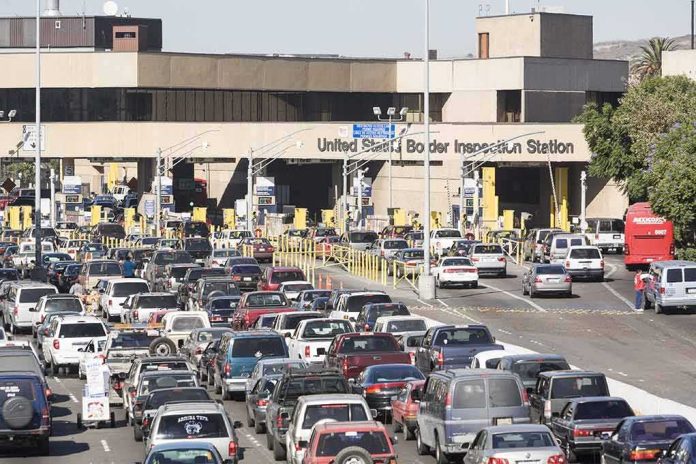
Customs officers at the Lewiston-Queenston Bridge in New York stopped a commercial tractor-trailer on September 22 during a northbound inspection, according to local reporting that cites Customs and Border Protection. Officers noticed floor changes inside the trailer and used a canine to check the area. The trailer moved to secondary inspection, where officers found 174 vacuum-sealed packages that field-tested positive for cocaine, weighing about 450 pounds.
Media accounts report that Customs and Border Protection estimated the cocaine’s value at about $6 million. Officers seized the shipment and turned the case over to Homeland Security Investigations in Buffalo for further review. Reports describe the driver as a 21-year-old Canadian man. Officials did not release the driver’s name or charging details at the time of reporting. Field tests gave a positive result for cocaine, with final laboratory results to follow.
How The Stop Fits Northern Border Drug Patterns
Threat reports over many years say cocaine often moves north into Canada through land ports of entry. Traffickers use commercial trucks, hidden compartments, and other changes to hide loads. Canine teams and secondary inspections are common tools that officers use to find these stashes. This seizure lines up with that pattern: a commercial trailer, a modified floor, a canine alert, and a large northbound cocaine load. Federal strategies and analyses have described this route and method before.
Government briefings on the northern border have also noted that criminal groups adapt to enforcement. When officers catch one method, smugglers try another. That cat-and-mouse cycle drives agencies to use layered tactics, like officer experience, technology, canine teams, and deeper inspections. The Lewiston-Queenston Bridge bust shows that layered approach in action. The floor change drew attention. The canine pointed to risk. The secondary search produced the load and stopped it cold.
Why This Matters Beyond One Big Bust
Large seizures block profits for drug networks, but they also reveal how often criminals exploit trade lanes most families rely on. Commercial trucking keeps food and goods moving. Yet the same system can hide dangerous cargo. Many Americans worry that government can be slow, wasteful, or captured by insiders. Border cases like this show frontline work that protects communities, but they also expose how persistent these threats remain despite years of plans and money.
This hero K-9 named Star sniffed out $6 million worth of cocaine hidden under the floor of a tractor-trailer.
CBP says officers along the U.S.-Canada border discovered roughly 450 pounds of cocaine worth an estimated $6 million after noticing modifications during an inspection… pic.twitter.com/W44zDQXPs9
— Fox News (@FoxNews) September 30, 2026
People across the political spectrum want fair laws, safe streets, and honest leadership. They also want clear results. This case is a result you can measure in pounds and dollars. Still, key details are limited to what officials have shared through media. Agencies say the investigation is ongoing. Final lab reports, valuation methods, and any charges would give a fuller picture. For now, officers stopped a major northbound cocaine shipment at a critical gateway between the United States and Canada.
Sources:
facebook.com, foxnews.com, nextnewsnetwork.com, singlinkbot.com