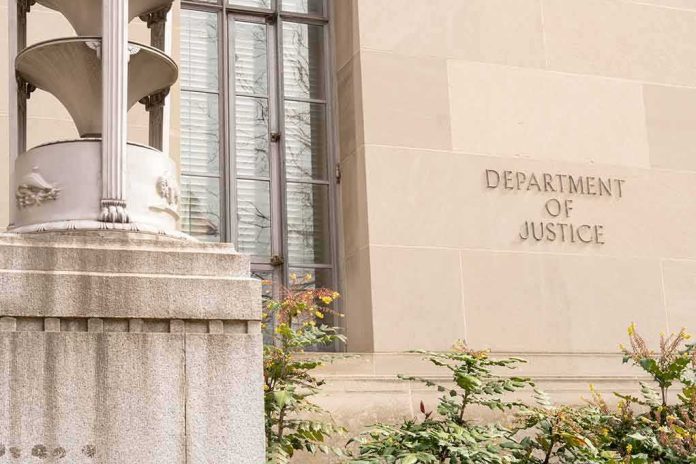
Federal prosecutors in Miami issued a grand jury subpoena to former Federal Bureau of Investigation (FBI) Director James Comey, escalating a Justice Department inquiry into officials tied to past investigations of President Trump.
Story Snapshot
- Prosecutors in Miami sent a subpoena to James Comey as part of a Justice Department probe.
- Reports say the inquiry examines whether former officials improperly targeted President Trump.
- Comey has previously defended the Russia investigation while acknowledging procedural flaws.
- An earlier court order flagged concerns about prosecution conduct in a related Comey matter.
What The Subpoena Signals About The Current Probe
Reuters reported that federal prosecutors in Miami issued the subpoena to James Comey. The report cites coverage indicating the subpoena ties to a Justice Department inquiry into officials involved in earlier Trump-related cases. The Los Angeles Times said investigators are looking at whether former law enforcement and intelligence leaders ran a years-long effort against Trump, a claim that former officials have long disputed. A subpoena does not allege a crime by itself. It compels evidence as investigators test specific theories.
USA Today summarized that the focus reaches back to the 2016 election and the government’s response to Russian interference. That includes decisions made while Comey was FBI director and the work of other Obama-era officials. Bloomberg likewise framed the subpoena as part of a broader review of whether there was a coordinated effort against Trump, citing people familiar with the matter. Authorities have not released the sworn filing that explains the exact scope. That limits what the public can verify today.
How Comey Has Framed His Past Decisions
PBS reported that Comey has said the Russia investigation was “done by the book,” even as he admitted “real sloppiness” in surveillance paperwork tied to a former Trump campaign aide. He also told Congress he was overconfident in internal review procedures and called the mistakes “embarrassing,” while still defending the core investigation as necessary. The Justice Department’s inspector general previously found that Comey kept certain memos at home in violation of policy, but did not charge him for that conduct.
Comey has also pushed back on later criminal claims and has said he is innocent when accused. The BBC reported that he responded to earlier charges by saying, “I am innocent. So, let’s have a trial”. Those statements preview how he is likely to respond to new steps by prosecutors. They also remind readers that grand jury activity is only one phase in a long process. Any charges must rest on evidence that can stand up in court, not on political debates.
Why This Fight Resonates Beyond One Subpoena
This subpoena lands in a climate where many Americans on both the left and right distrust Washington. People see insiders protecting allies and punishing rivals. Court records show the risks of pushing too far. In 2025, a judge ordered the Justice Department to turn over grand jury materials in a Comey matter and noted signs of government misconduct by a Trump-aligned prosecutor. That ruling shows how process mistakes can backfire and deepen public doubts about fairness.
NEW: Trump DOJ Issues Fresh Subpoena In James Comey Investigationhttps://t.co/QmAK1L4u5d
— Mediaite (@Mediaite) August 31, 2026
At the same time, the Justice Department often uses grand juries to gather facts before making any call. That approach can show independence if the facts support action. But when the target is a former FBI director tied to Trump-era battles, every move looks political to someone. The best guide for readers is evidence, not spin. Today’s verified facts are simple: a subpoena exists, it came from Miami prosecutors, and it is part of a broader inquiry reaching back to 2016.
Sources:
mediaite.com, cbsnews.com, latimes.com, usatoday.com, youtube.com, foxnews.com, en.wikipedia.org, pbs.org, abcnews.com