
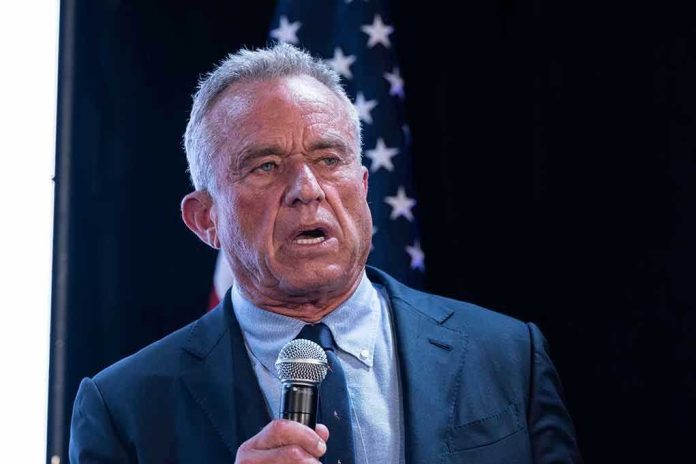
A new federal partnership led by Health and Human Services aims to protect autistic Americans from dangerous wandering, answering a real safety problem families face.
Story Highlights
- Health and Human Services announced a federal autism safety partnership in Rochester, Minnesota.
- The effort targets wandering and missing incidents that place autistic people at real risk.
- Federal agencies are linking data and local partners to improve prevention and rapid response.
- Families, police, and community groups are central to the new safety approach.
What Was Announced In Minnesota
Health and Human Services Secretary Robert F. Kennedy Jr. traveled to Rochester, Minnesota, to announce a new federal partnership focused on improving safety for autistic individuals. The visit included a closed roundtable with federal, local, and community partners, and law enforcement leaders. Organizers framed the event around practical safety steps that local teams can act on. The announcement highlighted coordination and tools that help prevent wandering and speed recovery when a person goes missing.
Health and Human Services described the partnership as a way to connect federal support with community needs. The focus was on safety in daily life, not bureaucracy or new red tape. Local police and service providers discussed how technology, training, and family plans can cut response time. Federal leaders stressed that the goal is fewer missing-person calls and faster reunions. The message was clear: when families and first responders have a plan, lives are safer.
Why Wandering Demands Action
Research shows that about half of autistic children attempt to wander or “elope” at least once after age four. Families report real fear when a child slips out a door or runs into traffic. Studies also show that many missing cases last long enough to cause serious concern, and risks rise near water, roads, and trains. These facts explain why safety programs focus on prevention, tracking tools, and rapid alerts. The new partnership targets those exact needs with local execution.
Clinicians and national groups have warned for years about high rates of wandering and the strain on caregivers. One nationally representative study found more than one in four children with developmental conditions wandered within the last year. Those numbers mirror what many parents already know from lived experience. By aligning federal resources with proven local tactics, leaders aim to turn data into action. That includes planning, training, and technology that are simple, fast, and family-centered.
How Federal And Local Teams Will Work Together
The plan builds on a growing federal effort to improve real-world autism safety through better data sharing and local support. The National Institutes of Health and the Centers for Medicare and Medicaid Services announced a data platform to inform autism research and practice, which can guide safety policy and resource placement. In the field, local agencies can use federal guidance to expand family education, coordinate search protocols, and adopt tools that help locate a missing person quickly.
🇺🇸 HHS Sec. RFK Jr. Announces MAHA Partnership for Autism Safety in Roch… https://t.co/PXhsBwfhZK via @YouTube
— Ceara (@ceara2378) August 21, 2026
Officials in Rochester underscored that community ties make the difference in the first minutes of a search. Families, schools, churches, police, and rescue teams need simple checklists and a clear chain of action. Federal backing can help train officers, support outreach, and standardize alerts. For many readers, this is basic common sense: empower families, cut red tape, and move fast when a life is at stake. That is how you protect dignity, uphold local control, and save time and taxpayer money.
Sources:
facebook.com, youtube.com, fox9.com, apnews.com, factcheck.org