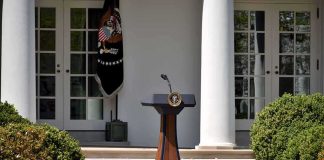

President Trump left the podium mid-speech on Long Island to embrace the parents of 12-year-old Bronx shooting victim Jacob Freytes, turning a crime policy event into a raw moment of grief and resolve.
Story Highlights
- Trump paused his Nassau County speech to hug Jacob Freytes’ mother and greet his father.
- The gesture came during remarks focused on crime and public safety in New York.
- Video from the event shows the exchange and the crowd’s reaction.
- The moment underscores public anger about repeat offenders and street violence.
What Happened On Stage In Garden City
President Trump spoke at the Nassau County Police Academy in Garden City, New York, about crime and safety when he mentioned Jacob Freytes, a 12-year-old killed by a stray bullet in the Bronx last month. Trump then stepped off the stage, hugged Jacob’s mother, Migdalia Martinez, and greeted his father, retired New York Police Department Sergeant Jesus Freytes. Video from the event captured the embrace and the audience’s applause as Trump returned to the podium to continue his remarks.
News reports described the exchange as unscripted and emotional. The moment came as Trump tied the family’s loss to his push for tougher action against violent offenders. The act aligned with the event’s pro-police theme and his claim that his administration is driving down violent crime. Supporters in the room framed the embrace as compassion in action amid a broader call for order and accountability on New York streets.
Why This Struck A Nerve Beyond The Room
Jacob’s killing reflects a fear shared across party lines: kids are dying because dangerous people are back on the street. The parents’ presence highlighted that fear in human terms. Many Americans blame a justice system that cycles repeat offenders through courts without real consequences. Others warn that headline moments can overshadow deeper causes of violence. But few dispute that families like the Freytes bear the cost when the system fails to protect them.
Public gestures like this often become a mirror for our divides. Supporters see empathy and leadership; critics sometimes see performance. Communication scholars note that news coverage of leaders’ compassionate acts tends to judge not only what happened, but whether it feels “authentic,” which shapes how audiences respond. That pattern helps explain why the same clip can inspire praise, anger, and grief all at once—especially in an era when trust in institutions is weak.
Policy Claims And The Bigger Safety Debate
Trump linked the moment to his argument that violent crime has fallen under his watch and that tougher enforcement works. At the same time, Jacob’s case renewed calls for action against repeat offenders and illegal guns moving through city neighborhoods. Local supporters point to Nassau County’s reputation for safety and argue that strict policing and prosecution help keep it that way, even as nearby areas struggle with shootings and theft.
Families like the Freytes want fewer speeches and more results. They want streets where a child can buy a snack and get home safe. Both conservatives and liberals who feel shut out by elites share that basic demand. They worry that political leaders and bureaucrats protect careers before communities. The embrace on Long Island cut through that noise for a moment. The hard test is what follows: arrests that stick, courts that act, and safer blocks where kids can grow up.
How Media And Audiences Process Moments Like This
Nonverbal signals matter in politics because they build common ground when words feel stale. Researchers who study Trump’s communication note that simple, visible gestures—like stepping off a stage to close distance—serve as cues that he is with the audience, not apart from it. Those cues can rally supporters and pressure officials to focus on the stated mission: make communities safe enough that parents do not have to bury children.
Still, a hug is not a policy. The American public wants less spin and more safety. They want a justice system that keeps violent offenders off the street, a government that spends wisely, and leaders who show up for families before and after the cameras. If this moment leads to steady work—stronger cases, faster court timelines, and real deterrence—it will mean more than a clip. It will mean fewer grieving parents at the next speech.
Sources:
thegatewaypundit.com, nypost.com, foxnews.com, facebook.com, nbcnews.com, time.com