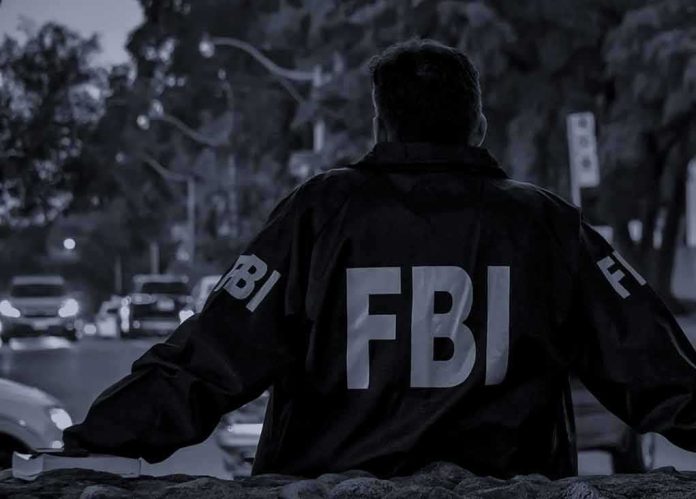
A retired Federal Bureau of Investigation undercover agent says cartel enforcers tortured a man and burned him in a 55‑gallon drum, a claim he recounts in a new interview preview.
Story Snapshot
- Retired agent Scott Payne describes a victim “cooked alive” in a drum and mutilated.
- Payne says captors stripped him and demanded his identity details to check for a wire.
- He recounts seeing a lion cage with large bones and hearing about a media hit list.
- Payne’s long undercover record against violent groups is documented in past coverage.
Who Is Speaking And What He Says Happened
Retired Federal Bureau of Investigation (FBI) undercover agent Scott Payne describes a cartel torture killing where a victim was dismembered and burned in a 55‑gallon drum. Payne says the attackers cut off the victim’s hands or fingers and used either acid or diesel during the burn. He recounts this in a preview clip tied to a longer interview. The clip also relays that Payne was stripped and searched for a wire and forced to provide his full identity while under threat.
Payne adds that his captors refused to ask for his children’s names and implied they could find them anyway. He mentions a lion kept by criminals and “large bones in a cage,” which he links to cartel brutality. He also recalls a 19‑year‑old gunman preparing a hit list that included journalists and TV anchors. These statements appear together in the preview, which presents a series of intense scenes from his undercover past.
What We Know About Payne’s Background
Public interviews and show descriptions identify Payne as a retired FBI special agent with about 28 years in law enforcement, including deep undercover work with extremist and violent criminal groups. Prior reporting describes him infiltrating white supremacist networks, including Ku Klux Klan circles and The Base. Coverage ties his work to a foiled murder plot in Georgia, which led to arrests in January 2020, underscoring that he operated inside real, dangerous cells.
Multiple appearances since 2025 present the same core profile for Payne. Hosts and outlets describe him as a career undercover who spent years inside biker gangs, white supremacist groups, and cartel‑linked trafficking circles. That consistency across platforms does not prove each new anecdote, but it supports that he had genuine access to violent environments and faced lethal risk while undercover.
How The Preview Fits A Larger Pattern Of Undercover Work
Undercover operations are built to hide details from the public record. Government guidance and court rulings protect methods, identities, and techniques, which often blocks release of files through the Freedom of Information Act. Officials argue that disclosure can expose tactics and end future cases. That secrecy leaves many first‑person accounts like Payne’s hard to match to public documents, even when the events were real operations.
Major outlets have also explained how crime stories, especially those tied to cartels, mix real violence with staged fear. Researchers and reporters describe how criminal groups seed dramatic content to shape public reaction. This noisy information space can reward shocking details and punish careful verification. Responsible reporting still centers named sources and specific claims, while avoiding viral rumors that do not clear basic checks.
Why This Story Matters Across The Political Spectrum
Americans across the aisle worry that violent crime and cartel reach are rising while government accountability lags. Payne’s preview points to targeted threats against journalists and public figures, and to the use of terror tactics to control communities. Those concerns connect to a broader belief that powerful actors, legal or illegal, can operate with impunity. People on both the right and the left see this as proof that institutions often protect themselves first, not the public.
Podcast Summary | This Past Weekend w/ Theo Von: #674 – Scott Payne
Overview
Scott Payne, a retired FBI special agent with 28 years in law enforcement, spent much of his career working undercover inside some of the most dangerous criminal networks in America, including…
— Podcast Quickie (@podcast_quickie) August 10, 2026
Payne’s claims also spotlight the human cost when policy fights drag on. Border failures, drug demand, and weak follow‑through on prosecutions can let criminal groups spread fear. Families do not care about talking points; they want safety, honest numbers, and results. Clear cases, open metrics, and timely reporting would help rebuild trust. That starts with naming what happened, arresting who did it, and showing progress without spin.
Key Limits And What Comes Next
The preview format compresses scenes and does not name dates, locations, or the victim. That limits how much can be matched to public case files. Payne’s past record inside violent groups is documented, but the drum‑killing scene, lion cage, and media hit‑list claims appear here without those anchors. Longer interviews, book chapters, or official records would let readers gauge which events occurred in the same operation and how investigators acted on them.
Even with gaps, the clip raises urgent questions the public deserves officials to answer. Which agencies handled the underlying cases? Were victims identified and families notified? Were suspects arrested and tried? When government walls off too much, it fuels cynicism that only serves cartels and corrupt insiders. Sunlight, within safety limits, is not a threat to law enforcement. It is a tool that helps Americans see justice done.
Sources:
youtube.com, music.amazon.com, podcasts.apple.com