
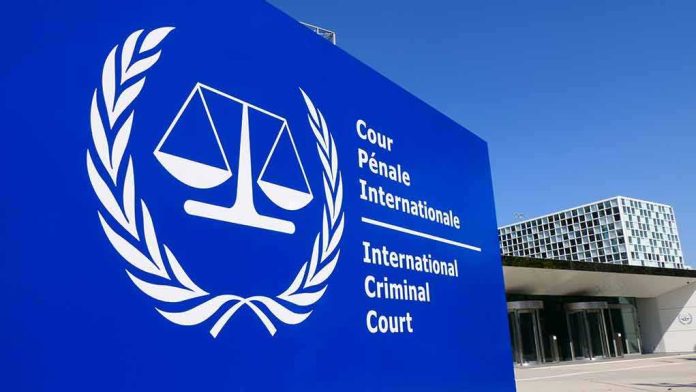
When a foreign leader and a big-city mayor trade threats over war crimes and arrest warrants, it exposes just how confused and polarized our justice system and politics have become.
Story Snapshot
- Israeli Prime Minister Benjamin Netanyahu says New York City Mayor Zohran Mamdani is “fomenting hate” after Mamdani backed an International Criminal Court arrest warrant and talked about having Netanyahu arrested if he visits the city.
- Netanyahu has vowed to come to New York for the United Nations General Assembly anyway, calling the war-crimes charges “bogus” and framing Mamdani’s stance as dangerous for Jewish residents and for unity in the city.
- Mamdani has now admitted New York City has no legal power to carry out the International Criminal Court warrant, but he is urging the federal government to arrest Netanyahu and says the prime minister is “not welcome” in the city.
- The clash highlights broader public anger over war, human rights, and elite impunity, while also showing how leaders use dramatic legal language more as political signals than as real legal plans.
Netanyahu’s sharp response to Mamdani’s arrest talk
Israeli Prime Minister Benjamin Netanyahu has forcefully rejected New York City Mayor Zohran Mamdani’s talk of arresting him under an International Criminal Court warrant, calling the mayor’s rhetoric divisive and dangerous. In interviews on American television, Netanyahu said Mamdani is “fomenting hate” and trying to pit New Yorkers against each other by branding him a war criminal. He argued that a mayor should represent Jews, Christians, Muslims, and others alike, not single out one community or leader for political attacks. Netanyahu also dismissed the war-crimes allegations themselves as “bogus” and described the International Criminal Court as lacking legitimate authority in this case.
Netanyahu has used several platforms to push this message, from news networks to podcasts watched by many younger Americans. On the Full Send Podcast, he went beyond the war-crimes dispute and attacked Mamdani’s broader agenda, calling his proposals “nonsense” and labeling him an “antisemite.” He warned that policies like defunding police or allowing open theft in stores would harm public safety and harm ordinary people, predicting Mamdani would be a “one-term” mayor if he wins office. For many conservative and centrist viewers, this framing taps into long-running fears about crime, disorder, and officials who seem more focused on ideology than on basic security.
Mamdani’s walk-back and call for federal action
Zohran Mamdani first gained attention by vowing to have Netanyahu arrested if the prime minister came to New York City, tying his pledge directly to the International Criminal Court warrant and the upcoming United Nations General Assembly. He described Netanyahu as a “war criminal” and said that as mayor he would not allow such a figure to move freely in his city. After reporters pressed him on the details, Mamdani’s administration reviewed the law and concluded that New York City does not have independent legal authority to enforce an International Criminal Court warrant against a visiting foreign leader. Mamdani has since publicly walked back the idea of city police making an arrest, but he is now urging the federal government to join the International Criminal Court and carry out the warrant if Netanyahu enters United States territory.
In the same statement, Mamdani insisted that Netanyahu is “not welcome in New York City,” and said no “war criminal at large” should be treated as a normal visitor or honored guest. That language speaks to a deep frustration many Americans feel across party lines: they watch powerful figures travel, speak, and sign deals while civilians suffer in wars, and they see little accountability for top leaders who order or defend those actions. At the same time, Mamdani’s shift from promising his own arrest action to calling on Washington exposes how limited local power is when it comes to foreign policy and international justice. His message now depends on a federal government that many citizens on both the right and the left already distrust as slow, self-protective, and more focused on political theater than on hard decisions.
Netanyahu’s travel plans and the clash over immunity and public anger
Despite Mamdani’s statements and the International Criminal Court warrant, Netanyahu has stressed that he will still come to the United Nations General Assembly in New York this fall. He told interviewers he is “not concerned” about Mamdani’s threats and plans to speak “the truth” from the United Nations podium on behalf of Israel and what he calls the Israeli–American alliance. In another appearance, he said, “I will come to fight,” suggesting he sees the trip not only as a diplomatic mission but also as a chance to confront critics on a global stage. Media reports and legal experts note that, in practice, a foreign head of government visiting for the United Nations enjoys strong protections and that local officials have no clear path to arrest such a leader on their own.
𝐍𝐄𝐓𝐀𝐍𝐘𝐀𝐇𝐔 𝐀𝐂𝐂𝐔𝐒𝐄𝐒 𝐌𝐀𝐌𝐃𝐀𝐍𝐈 𝐎𝐅 𝐀𝐋𝐈𝐆𝐍𝐈𝐍𝐆 𝐖𝐈𝐓𝐇 𝐇∗𝐌𝐀𝐒 𝐀𝐅𝐓𝐄𝐑 𝐌𝐀𝐘𝐎𝐑 𝐂𝐀𝐋𝐋𝐒 𝐇𝐈𝐌 𝐀 𝐖𝐀𝐑 𝐂𝐑𝐈𝐌𝐈𝐍𝐀𝐋
Israeli Prime Minister Benjamin Netanyahu fired back at New York City Mayor Zohran Mamdani on Fox News, accusing him of… pic.twitter.com/bfLXey1Sds
— M.A. Rothman (@MichaelARothman) July 28, 2026
As this feud plays out on television, social media, and campaign trails, many Americans see a familiar pattern. Leaders use arrest talk and war-crimes language as symbols of moral judgment, yet the actual legal tools sit in the hands of federal agencies and international bodies that often move slowly or not at all. For conservatives frustrated with what they view as “woke” politics and global courts undermining national sovereignty, Mamdani’s focus on the International Criminal Court feels like grandstanding rather than real problem-solving. For liberals angry at civilian deaths and what they see as growing impunity for the powerful, Netanyahu’s defiance and talk of “bogus” charges can feel like proof that elites play by different rules. Both sides, however, can look at this showdown and see the same core problem: a political class more skilled at trading insults on camera than at fixing the broken systems of war, justice, and accountability that keep the American Dream out of reach for millions.
Sources:
facebook.com, news18.com, abcnews.com, youtube.com, foxnews.com, timesofindia.indiatimes.com, instagram.com