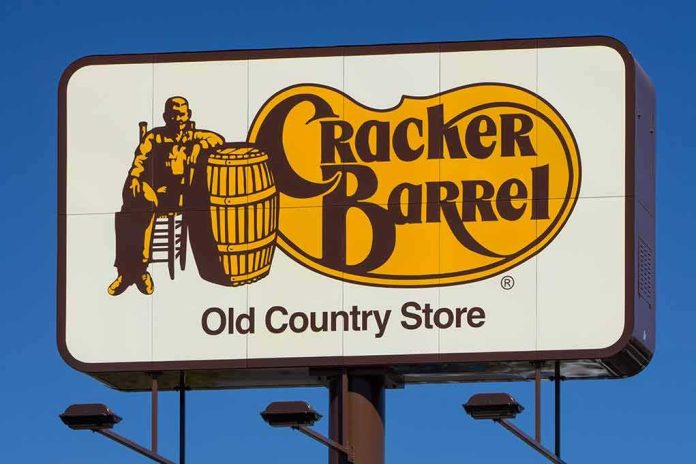
Cracker Barrel’s failed attempt to “modernize” its down‑home image has now claimed its top leader, turning a roadside restaurant chain into the latest warning sign about how far corporate America can push cultural change before loyal customers push back.
Story Snapshot
- Cracker Barrel CEO Julie Felss Masino will step down after a controversial rebrand angered longtime customers and drew national political fire.
- The overhaul removed the “Old Timer” logo and vintage décor as part of a $700 million refresh, but was rolled back within weeks after sharp backlash.
- Investors initially kept Masino in place, then the board moved to replace her with veteran restaurant executive David Deno.
- The fight over Cracker Barrel’s look and feel has become a bigger story about trust, identity, and who really calls the shots inside American companies.
CEO Exit After a Failed Makeover
Cracker Barrel said Chief Executive Officer Julie Felss Masino will step down as CEO and leave the board on August 10, ending a tenure of less than three years. The company announced that David Deno, a longtime restaurant leader and former head of Bloomin’ Brands, will take her place. Her exit comes after a stormy year in which a push to modernize Cracker Barrel’s brand triggered intense anger from loyal diners, financial pain, and political attacks.
Masino was hired in 2023 with a clear mission: overhaul a struggling heritage chain and attract younger guests without losing the core business. She launched a broad plan to remodel stores, refresh menus, and update the brand’s image, backed by about $700 million in planned spending across more than 660 locations. The company framed these steps as necessary to improve the guest experience and keep Cracker Barrel competitive in a changing dining market.
What the “Modernization” Changed
At the heart of the fight were symbols many customers saw as part of Cracker Barrel’s identity, not just design choices. Masino’s overhaul simplified the logo, dropping the image of the elderly man in overalls beside a barrel and the words “Old Country Store,” sometimes called the “Old Timer” or “Uncle Herschel.” Inside restaurants, vintage wall décor and cluttered country-store touches were removed or toned down to create cleaner, more modern spaces.
The company said these changes were meant to declutter dining rooms and make visits smoother and more comfortable for guests. Masino later explained that she believed she was revitalizing Cracker Barrel, not erasing it, and that she wanted people to “love this brand” the way she did. Early messaging from the company even suggested that critics were a “vocal minority,” signaling that management viewed the redesign as a sound strategy that would win over more customers in time.
Backlash, Politics, and Investor Pressure
The reaction was quick and fierce. Longtime patrons blasted the new logo and cleaner décor as a betrayal of the chain’s country roots, and online mockery went viral. Some conservative voices and media figures branded the effort a “woke” rebrand, accusing the company of chasing trendy corporate politics at the expense of tradition. President Trump joined in, publicly criticizing the redesign and Masino’s leadership, which pushed the dispute from a business decision into a national political talking point.
Cracker Barrel CEO Julie Masino steps down following criticism from consumers over the restaurant’s "modernization" push.
— Boston Avionics (@bostonavionics) July 27, 2026
Within a week of the logo change, Cracker Barrel reversed course, restoring the old logo and halting planned restaurant renovations. The company posted a statement saying, “We appreciate our guests for voicing their opinions and affection for Cracker Barrel… Our new logo will be discontinued, and our ‘Old Timer’ will remain,” a clear sign that customer pushback had won. Shareholders later removed a diversity marketing specialist from the board while voting, by about 75 percent of shares, to keep Masino, sending a mixed signal of support and frustration.
What This Says About Heritage Brands and Trust
Cracker Barrel’s struggle fits a wider pattern seen across many older brands that try to update their look to reach younger buyers. When leaders treat logos and décor as easy knobs to turn, they often discover that regular customers view these things as part of their own story and values. Modernization promises growth and relevance, but one wrong move can look like an attack on the past, especially in a country where many people already believe elites in business and government ignore them.
Masino has said she felt “fired by America” after the redesign, even though investors formally kept her in the job for a time. That feeling shows how powerful public anger can be when people think a familiar place is being remade from above without real listening. For conservatives, the Cracker Barrel saga confirms fears about “woke” corporate experiments. For liberals, it highlights how big companies chase image while deeper problems—like worker pay, community stability, and economic inequality—go unresolved. For both, it is one more sign that decisions are being made in boardrooms, not at tables where ordinary Americans sit.
What Comes Next Under David Deno
With David Deno taking over, Cracker Barrel is signaling a reset, not just in branding but in how it runs the business. Deno is known as an operations-focused executive, and his selection suggests the board wants stability after a year of culture war headlines and costly missteps. The chain still faces softer customer traffic and lingering damage from the rebrand, and management has warned those effects could continue through the current fiscal year.
The key question now is whether Cracker Barrel can fix its finances while honoring the nostalgia millions of diners expect. The company has admitted it “underestimated” how much its guests loved the old eclectic style and has promised that “Your Old Country Store is Here to Stay.” In a time when many Americans see corporate and political leaders as part of one distant “deep state,” this small fight over rocking chairs and wall clutter has become a bigger test: can a major company hear both new customers and old ones without losing its soul—or their trust?
Sources:
facebook.com, nypost.com, wsj.com, marketwatch.com, independent.co.uk, abcnews.com, finance.yahoo.com, foxbusiness.com, newsweek.com, people.com