
A left-wing prime minister just became the latest casualty of his own failing agenda, and his fall tells us a lot about where global politics is heading.
Story Snapshot
- UK Prime Minister Keir Starmer is resigning after less than two years in office, pushed by his own Labour Party.
- He admits his MPs no longer see him as the right man to lead them into the next election.
- Labour still holds a large majority in Parliament, so this is about political failure, not lack of power.
- His exit continues Britain’s revolving-door crisis, with seven prime ministers in about a decade.
Starmer Forced Out By His Own Side
British Prime Minister Keir Starmer has announced he will resign as both prime minister and Labour Party leader, less than two years after riding a big left-of-center wave into power.[10] Speaking outside 10 Downing Street, he admitted his own party now questions whether he is “best placed” to lead them into the next general election and said he accepts their answer “with good grace.”[1] He told the country that every choice he made was “about putting the country I love first,” but the timing shows his colleagues saw things differently.[1]
Starmer confirmed he has already informed King Charles of his decision to step down and asked Labour’s ruling National Executive Committee to set a firm timeline for choosing his successor.[1] Nominations for the leadership are set to open on July 9 and wrap up before Parliament’s summer break, with a new leader expected before lawmakers return in September.[1][11] Until then, Starmer says he will stay on as caretaker prime minister and promises an “orderly handover of power” to whoever replaces him.[2]
Why A Leader With A Huge Majority Still Fell
Starmer is not leaving because he lost an election or his governing majority. Labour still holds more than 400 seats in the 650-seat House of Commons, giving it a simple majority of 156 and a working majority of about 165 votes.[11] That means his problem was not math, but authority. Reports show his public approval collapsed to historic lows, with one Ipsos poll labeling him the most unpopular British prime minister in modern records, and dozens of Labour members of Parliament openly calling for him to go.[10][3]
Media and think-tank accounts describe months of pressure inside Labour over poor local election results, unclear economic direction, and anger over policies on migration and welfare.[7][3] Earlier this year, Starmer had brushed off calls to quit and said he would “get on with governing,” even after members of his own cabinet resigned to force his hand.[7] Now many of those same critics are celebrating, while the country faces yet another transfer of power decided inside a party, not at the ballot box.[14]
Orderly Transition Or Left-Wing Meltdown?
Starmer tried to frame the decision as a responsible, almost technocratic move. He stressed that he had “listened” to his parliamentary party and that the leadership change would be controlled, with clear dates and rules for the contest.[1][5] Supporters argue this shows the system “working,” with a leader stepping aside to protect the party’s chances before the next election rather than clinging to office at all costs. They point to his pledge to give his successor “full and unequivocal support” to keep Labour in power.[2]
But critics, including many outside Britain, see something else: another center-left leader who talked about stability while delivering chaos. Starmer will become roughly the seventh prime minister in about ten years, continuing a pattern of rapid turnover that began with Conservative failures and now includes Labour’s own implosion.[14][22] Like past short-lived leaders, he leaves behind a country still wrestling with high costs, culture fights, migration pressures, and distrust of political elites that talk “fairness” while everyday people feel squeezed.
What This Signals For America-First Conservatives
For American readers, Starmer’s fall is a warning sign about the global progressive project. A leader comes in on big promises, leans into climate rules, high spending, and soft-border instincts, and soon loses the people who put him there. British voters gave Labour huge power, yet less than two years later its own members believe their best chance is to swap leaders again rather than defend their record to the public.[11][5] That is not confidence; it is panic under a polite label.
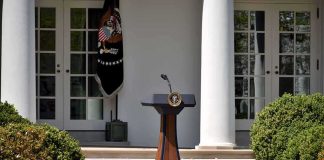
UK Prime Minister Keir Starmer announced his resignation outside 10 Downing Street following intense internal pressure from the ruling Labour Party.
Watch #ThePrintUncut: https://t.co/FhvHGJixSx pic.twitter.com/lAHYySeTSV
— ThePrintIndia (@ThePrintIndia) June 22, 2026
It also highlights the contrast with the current Trump administration in Washington, where voters chose a clear turn away from globalist drift and weak borders. Starmer’s claim that he leaves Britain “far stronger and fairer” than he found it rings hollow when his own party forced him toward the exit.[1] For conservatives, the lesson is simple: when leaders ignore everyday concerns about energy costs, law and order, migration, and national identity, even their allies eventually decide they are a liability instead of an asset.
Sources:
[1] YouTube – UK Prime Minister Keir Starmer says he will resign
[2] Web – Prime Minister Keir Starmer’s resignation speech in full – BBC
[3] YouTube – IN FULL: Keir Starmer’s resignation speech outside 10 Downing St
[5] Web – Keir Starmer resigns as UK Prime minister in a statement outside 10 …
[7] Web – The full resignation speech of Prime Minister Keir Starmer resigning …
[10] Web – Starmer resigns as prime minister – Streeting backs Burnham
[11] Web – Keir Starmer – Wikipedia
[14] YouTube – Starmer insists ‘I am not going to walk away’ after Labour’s local …
[22] YouTube – British prime minister steps down after tumultuous six-week tenure