The most important detail in the White House Correspondents’ Dinner shooting attempt wasn’t a gunshot—it was a family member’s phone call.
Quick Take
- Investigators say suspect Cole Tomas Allen sent a “manifesto” to relatives before the dinner, and a family member alerted police.
- Authorities describe writings that targeted Trump administration officials, law enforcement, and White House personnel, alongside anti-Trump and anti-Christian rhetoric online.
- Allen reportedly used legally owned firearms and practiced at shooting ranges, underscoring how “lawful” steps can still build toward unlawful intent.
- The case spotlights a prevention reality many people dislike: families often sit closest to warning signs, long before the public sees them.
A High-Profile Night, a Low-Visibility Tripwire
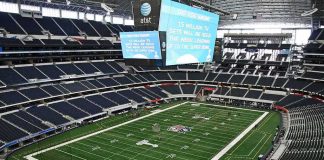
Cole Tomas Allen, a 31-year-old from Torrance, California, emerged in reporting as the suspect in an attempted shooting connected to the White House Correspondents’ Dinner at the Washington Hilton on April 25, 2026. The headline-grabbing part is the venue; the operational part is the lead-up. Investigators say Allen sent writings described as a manifesto to family members before the incident, and one relative alerted police, triggering rapid attention.
The tip matters because it reframes the event from “security failure at a fancy dinner” to “interruption of a plan that had already left bread crumbs.” Reports indicate the writings the family saw did not explicitly name the dinner. That detail cuts both ways: it reduces certainty for the relatives reading it, yet it shows why authorities treat even vague threats seriously when they include intent, targets, and fixation. Families rarely get perfect clarity; they get gut-level alarm.
What a “Manifesto” Signals to Investigators
Law enforcement tends to treat manifestos as more than angry journaling when they include target selection, justification narratives, and a sense of mission. Reporting describes Allen’s materials as aimed at Trump administration officials, law enforcement, and White House officials, with additional anti-Trump and anti-Christian rhetoric found on social media. That combination matters: when ideology hardens into dehumanizing language and perceived permission to act, it can accelerate from talk to logistics.
One reported distinguishing detail is the kind of self-branding that shows up in modern political violence: a stylized signature and persona-like phrasing. Another is claimed target prioritization that allegedly excluded the FBI Director Kash Patel. Americans disagree hard about politics, but common sense says lists and exceptions are not normal civic expression; they’re planning artifacts. Conservative values emphasize ordered liberty—speech protected, violence prosecuted—and the facts described here fit the category of pre-attack signaling, not protest.
The Pipeline from Rhetoric to Range Time
The most uncomfortable thread in the reporting is how ordinary the preparation can look on the surface. Allen reportedly used legally owned firearms, and he practiced at shooting ranges. None of that is illegal, and millions of responsible gun owners do the same for sport and self-defense. The distinction investigators look for is convergence: weapons access, tactical curiosity, grievance escalation, and a timeline that collapses into a single “I’m going to act” decision.
Reports also link Allen to group affiliation and protest activity—references to “The Wide Awakes” and attendance at a “No Kings” protest in California. Membership or attendance alone proves nothing criminal, and Americans retain a First Amendment right to assemble and speak, even loudly. The lawful-to-unlawful transition emerges when a person internalizes politics as a mandate for violence. The conservative view of civic stability is simple: elections and courts settle disputes, not bullets.
The Quiet Heroism of the Family Tip
Most prevention stories turn on a human relationship, not a gadget. Investigators describe relatives receiving Allen’s writings and one family member contacting police in New London, Connecticut. Another reported detail places family ties in Maryland. The specific relative varies across accounts, which is common early in investigations, but the core fact remains: someone close to him chose the country over the comfort of silence. That decision can fracture a family, and it can save strangers.
Americans over 40 recognize this moral tension. You want to believe “it’s just venting,” especially if the person is educated, functional, or charismatic. Yet families also know when a loved one crosses into fixation—constant references to “doing something,” rehearsing a cause, narrowing enemies, and rejecting restraint. When reporting describes rhetoric that frames “turning the other cheek” as complicity, it signals an internal permission structure. Calling police becomes the last ethical lever available.
What This Case Suggests About Security and Accountability
High-profile gatherings already operate inside layered security, but layered security cannot read minds. The most practical lesson is that prevention depends on distributed responsibility: family members, friends, coworkers, and local police receiving a tip and treating it as credible. Conservatives argue for competent institutions that do the basics well—respond quickly, share information, and apply the law evenly. The reporting suggests authorities moved rapidly once notified, and the attempt did not become a mass-casualty nightmare.
The bigger question is cultural, not technical: how a politics-soaked media environment turns some people into absolutists who see opponents not as fellow citizens, but as enemies of humanity. The answer cannot be censorship-by-default; that solution always expands and eventually targets mainstream dissent. The answer also cannot be shrugging at explicit threats. Common sense sits in the middle: investigate credible warnings, prosecute clear crimes, and encourage families to report danger early—before rage finds a venue.
"Suspect sent "manifesto" to family before dinner, source tells CBS News.
Allen wrote that he planned to target Administration Officials, "prioritized from highest-ranking to lowest,"
and
Authorities "only if necessary. He said Hotel Employees and Guests weren't his intended…— 🇺🇸Veritas Barbie, Truth Will Prevail🇺🇸 (@barbiebrox) April 26, 2026
Every time a case like this surfaces, Americans face a blunt truth: the first line of defense often lives at the dinner table. The public sees the aftermath, but relatives see the escalation in real time—new obsessions, new enemies, new “plans.” The family member who called police didn’t just interrupt a suspect; they interrupted a storyline that ends in funerals and decades of national bitterness. That’s the part worth remembering.
Sources:
Cole Tomas Allen WH shooting suspect: manifesto found, family offers shocking details to police
White House Correspondents’ Dinner shooting suspect Cole Allen