The relentless wave of anti-police sentiment continues to erode law enforcement morale, posing a significant threat to public safety and community trust.
Story Highlights
- Anti-police sentiment fueled by political rhetoric and media amplifies hostility towards officers.
- Social media serves as a double-edged sword, promoting both transparency and misinformation.
- House hearings reveal the growing threats to law enforcement, including doxing and violence.
- Calls for enhanced support and policy reforms to protect officers and public safety.
Political Rhetoric and Media’s Role in Anti-Police Sentiment
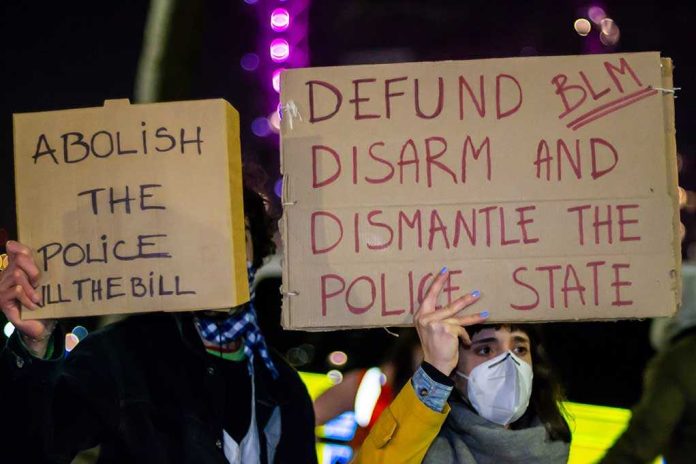
Political rhetoric and media narratives have increasingly painted law enforcement in a negative light, exacerbating anti-police sentiment across the nation. This growing hostility is not only demoralizing officers but also threatening the very fabric of public safety. The rhetoric has been linked to incidents of violence against officers, as seen in the tragic deaths of officers Gordon Beesley and Dillon Vakoff. Such events underscore the urgent need for balanced discourse that recognizes the sacrifices of those who serve.
Social media platforms, while valuable for transparency, often become breeding grounds for misinformation and inflammatory rhetoric. The ease with which misinformation can spread has contributed to a recruitment crisis in law enforcement, as potential recruits are deterred by the negative portrayal of police work. This misinformation challenges the integrity of law enforcement, calling for strategic policy reforms and enhanced officer support to mitigate these effects.
Current Developments and Congressional Response
As of late 2025, congressional hearings have brought to light the severity of the threats facing law enforcement officers. Chaired by Rep. Andrew R. Garbarino, these hearings emphasize the dangers of doxing and calls for violence against officers, highlighting a pressing need for mental health support amidst this hostility. Rep. Gabe Evans, with personal experience in the field, has linked these threats to significant recruitment gaps, urging for federal backing to bolster resources and support for law enforcement agencies.
The normalization of anti-police rhetoric through social media misinformation is a critical issue that lawmakers are striving to address. Legal actions and increased resources are being advocated to counteract these threats, with a particular focus on safeguarding the morale and well-being of officers. The ongoing hearings signal a potential shift towards greater federal involvement in protecting law enforcement officers from these rising threats.
Impact on Law Enforcement and Community Trust
The continued erosion of officer morale due to anti-police sentiment presents severe implications for public safety. In the short term, it leads to increased burnout and recruitment shortfalls, weakening the operational capacity of law enforcement agencies. In the long term, it undermines police legitimacy and fosters community distrust, particularly among minority communities who may already feel marginalized by existing policing practices.
Addressing these challenges requires a comprehensive approach that includes restoring trust between law enforcement and the communities they serve, ensuring accountability, and promoting positive interactions. As political and social divides continue to challenge reform efforts, it is crucial to prioritize strategies that support both officer well-being and community safety, ultimately reinforcing the foundational principles of law and order in society.
Sources:
Law Enforcement Perceptions of Social Media’s Impact on Policing
Homeland Republicans Warn of Rising Threats to Law Enforcement Driven by Dangerous Rhetoric
Procedural Justice and Police Legitimacy: A Social-Psychological Analysis
Justice or Just Us? Racial Disparities and Policing Practices
The Impact of Media Bias on Law Enforcement Perception